When AI Meets Real Life: Toys, Teen Platforms, and Federal Bans
This week brought three very different headlines.
An AI toy company exposed children’s conversations. Discord’s new age verification system upset users. Anthropic faced a US federal government ban while OpenAI signed a Pentagon deal.
At first glance, these stories seem unrelated. One involves a toy meant for children. Another concerns a chat platform used heavily by teenagers and online communities. The third takes place at the highest levels of government, involving artificial intelligence companies and national security.
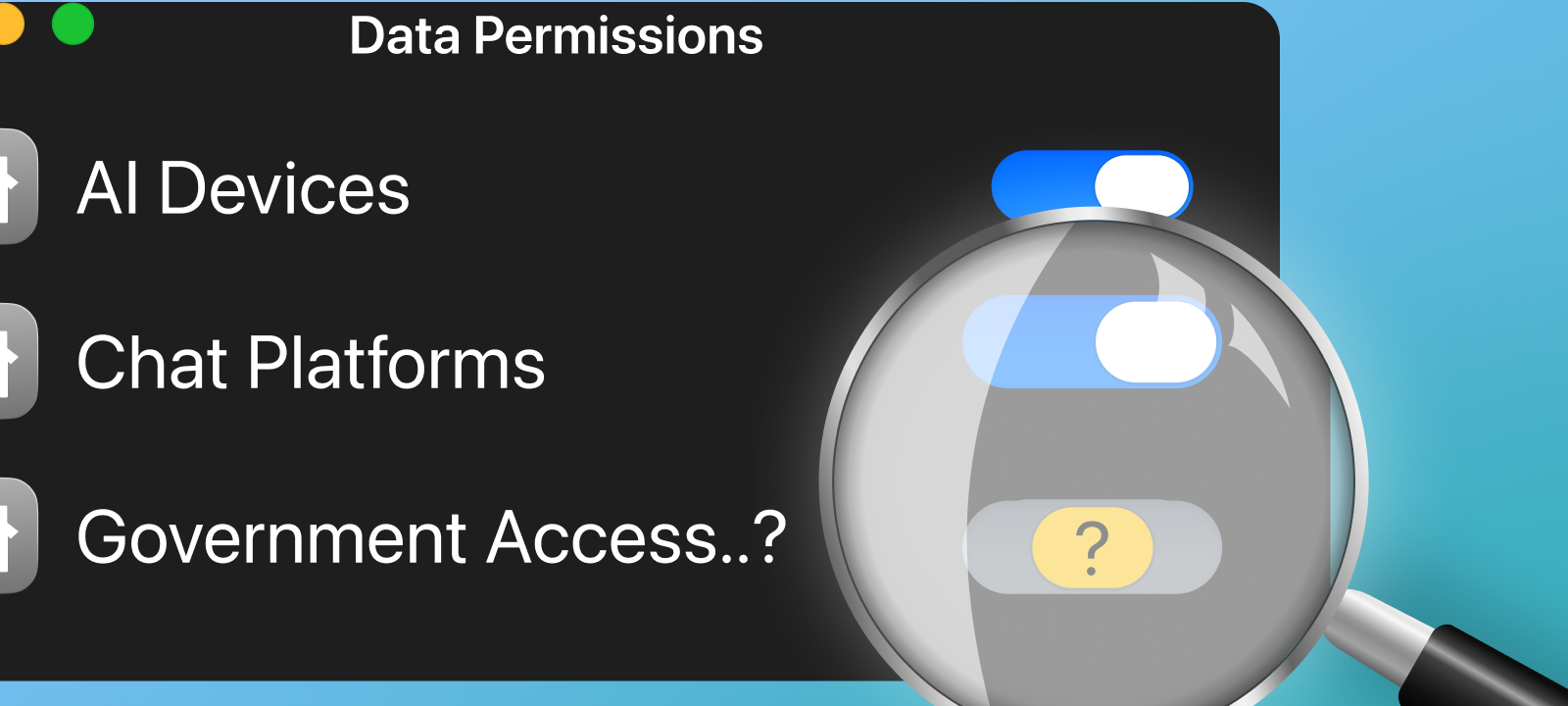
But they are connected by a single theme: who controls your data, and who decides what is considered safe?
Looking at these stories side by side reveals a larger shift in how artificial intelligence, privacy, and regulation are beginning to collide in everyday life.
The AI Toy Company and Children’s Privacy
An AI toy maker exposed thousands of responses from children interacting with its conversational AI toy. Lawmakers began raising questions after discovering that the children’s responses were accessible and not properly secured.
The toy was designed to hold conversations with children. Kids could ask questions, share stories, and talk freely with what felt like a friendly robotic companion. That type of interaction is exactly what makes AI toys appealing to families. They promise curiosity, learning, and companionship.
The problem was not that the toy could talk. The concern was what happened to the conversations after they were recorded.
Investigators found that thousands of responses from children had been exposed. Senators began asking how this data was stored, who had access to it, and whether the company had implemented appropriate safeguards.
Children interacting with conversational AI often share personal information without realizing it. A child might casually mention their name, talk about their school, describe family members, or discuss daily routines. They might even share fears or emotions.
To a child, it feels like a private conversation. In reality, that conversation may be processed, stored, and analyzed on remote servers.
Children’s data receives special protection under U.S. privacy law. Regulations such as the Children’s Online Privacy Protection Act require companies to be extremely careful when collecting and storing data from users under the age of thirteen.
Connected toys complicate this responsibility. Many modern AI devices are not simply plastic toys. They function as microphones connected to cloud services that process speech and generate responses.
When those systems store conversations, the information can persist long after the interaction ends. If that data becomes exposed, the consequences extend far beyond a single moment. Children often do not understand that digital information can remain stored for years.
As artificial intelligence moves into toys, classrooms, and learning devices, this incident highlights a growing concern: products marketed as safe or educational still carry real privacy risks if security practices are not handled properly.
Discord’s Age Verification Fiasco
At the same time, Discord faced a wave of criticism after introducing stronger age verification requirements.
The platform, which began as a communication service for gaming communities, has grown into one of the largest online chat networks in the world. Millions of teenagers and young adults use it daily to communicate, share media, and participate in community servers.
In response to increasing regulatory pressure to protect minors online, Discord began implementing stricter systems designed to verify users’ ages. In certain regions, this process may involve providing additional personal information or verifying identity through official documentation.
The change triggered immediate backlash among users.
Many members of the community felt the verification system demanded too much personal information. Discord had long been associated with pseudonymous identities, where users interact under usernames and avatars rather than their real-world identities.
Introducing identity verification altered that expectation.
The controversy reflects a broader conflict currently unfolding across the internet. Governments want platforms to verify ages in order to protect minors from harmful content and environments. Users, on the other hand, often prefer anonymity and minimal data collection.
Both sides argue that they are acting in the interest of safety.
However, once platforms begin collecting identity documents, a new risk emerges. Sensitive verification data must be stored somewhere. Large databases containing identification documents become extremely attractive targets for cybercriminals.
Even when companies act responsibly, history has repeatedly shown that perfect security is extremely difficult to maintain. Each additional layer of personal information collected by a platform increases the potential damage if a breach occurs.
The Discord debate demonstrates the difficult balance between protecting young users and protecting privacy.
Anthropic Federal Ban and OpenAI Pentagon Deal
While the first two stories affect everyday users directly, the third headline shows how artificial intelligence is also becoming a matter of national policy.
Fortune reported that Anthropic had been designated a supply chain risk in an unprecedented federal action, potentially affecting its ability to participate in certain U.S. government opportunities. At roughly the same time, OpenAI signed a deal with the Pentagon.
These developments signal something important about how governments now view artificial intelligence.
AI is no longer treated solely as a commercial software product. Increasingly, it is considered strategic infrastructure.
When federal agencies classify a company as a supply chain risk, they are often evaluating factors such as ownership structures, potential foreign influence, data exposure pathways, and transparency surrounding the technology.
Although this may appear distant from everyday users, it represents a major shift. Governments are beginning to evaluate AI companies the same way they evaluate telecommunications networks, defense contractors, and semiconductor manufacturers.
The Pentagon’s agreement with OpenAI further highlights this transformation. Artificial intelligence systems are rapidly becoming tools used in intelligence analysis, cybersecurity operations, logistics planning, and military research.
This places AI companies at the center of geopolitical competition.
What once seemed like experimental technology is now becoming embedded in national security systems.
The Common Thread: Data Control
Across these three stories, the same underlying question appears again and again.
Who controls the data?
In the toy case, it was children’s conversations. In Discord’s situation, it involved identity verification information. In the federal case, it concerns the companies building and controlling powerful AI systems.
Artificial intelligence depends heavily on data. The more information these systems process, the more capable they become. At the same time, the sensitivity of that data increases.
Every dataset introduces risk, especially when it contains personal or strategic information.
What This Means for Families and Home Users
For families and everyday users, these stories highlight the importance of awareness.
When purchasing connected devices, especially AI toys or smart assistants designed for children, it is worth understanding how the device processes and stores information. Many products rely on cloud services that record or analyze conversations.
Parents should also help children understand that AI devices are not private listeners. Even when a device feels like a friendly companion, it may still transmit information to remote servers.
Similarly, when platforms request identity verification, users should approach the process carefully. Uploading identification documents creates permanent records within a company’s system. Those records may persist long after the verification process is complete.
Understanding how technology collects and stores data is becoming a basic part of digital literacy.
The Bigger Shift We Are Seeing
Artificial intelligence is now appearing in places that few people expected only a few years ago.
It exists in children’s toys, social chat platforms, workplace tools, and national defense systems. That range reflects how quickly the technology has spread into everyday life.
At the same time, public understanding of how these systems operate has not kept pace with their deployment. Companies are still developing standards for data governance and transparency, while lawmakers attempt to create regulations that address new risks.
Users are navigating this evolving landscape in real time.
This week’s headlines are not isolated events. They are signals of a larger transition.
Artificial intelligence is becoming deeply integrated into both everyday technology and critical infrastructure. As that integration grows, questions surrounding privacy, security, and data ownership will become more central.
For families and home users, the most effective response is not fear but awareness. Asking questions, understanding privacy policies, and approaching new AI-powered products carefully can reduce unnecessary risks.
Technology continues to move quickly. The data we share with it moves just as quickly.
 SecureMac is dedicated to cutting through the noise and helping people stay safe, informed, and confident with their Macs. Lover of all things mac-security.