Apple and EU Regulators Clash Over AI Assistant Access and Privacy
Apple’s developing artificial intelligence strategy is increasingly tied to questions about privacy. Reporting on the European Union’s AI interoperability rules describes a dispute over how much operating-system access competing assistants should receive. Apple argues that broad access could expose sensitive personal information or weaken protections around Siri and other system features.
Apple and European Regulators Disagree About AI Assistant Access
The European Union’s Digital Markets Act requires certain large technology platforms to provide competitors with access to important features when comparable access is available to the platform owner’s own products.
European regulators have been examining how this principle should apply to AI assistants. In practice, the issue could affect whether third-party assistants receive access comparable to Siri’s access to operating-system features and user information.
Apple argues that giving outside assistants broad access could create security and privacy risks. A deeply integrated assistant may need to work with messages, calendars, contacts, files, notifications, photos, location information, and data from other applications.
Apple said it proposed an 18-month transition while it developed a system for safer third-party assistant access, but regulators rejected the plan. The Verge reported that Apple has no public timetable for bringing Siri AI to iPhone and iPad users in the European Union. Apple’s WWDC announcement says Siri AI will remain available there on Mac and Vision Pro.
Google faces related Android requirements, but it has until 2027 to make the required changes. That allows Gemini to remain available while Google works on compliance.
The disagreement involves more than competition between AI companies. It raises a legitimate privacy question: how much personal information should an operating system expose to an assistant created by another company?
A useful AI assistant may need broad access to be genuinely helpful. It might need to read a message, find a date, open a document, check a calendar, or perform an action inside another application. Each new connection also creates another opportunity for misuse, excessive collection, security mistakes, or confusing permission requests.
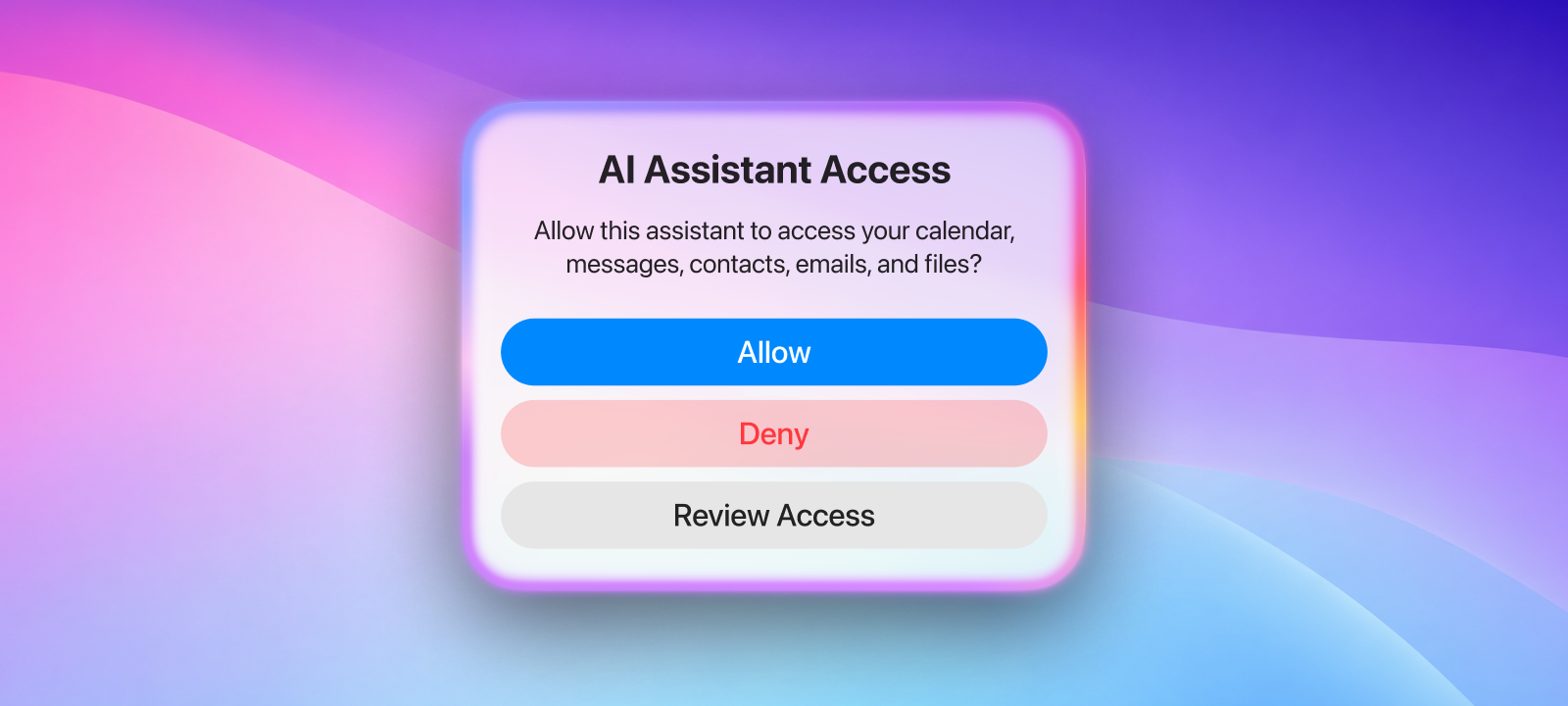
The safest outcome would include clear permission controls, limited access by default, understandable explanations, and the ability to revoke access without disabling unrelated features.
Privacy and Competition Are Both Real Concerns
Apple has a commercial reason to protect Siri’s position, so its privacy argument should not be accepted without examination. Regulators also have a reasonable interest in preventing one company from using control of an operating system to exclude competitors. At the same time, forcing technical access without strong limits could expose information that people reasonably expect the operating system to protect.
These goals do not have to be treated as opposites. Competition can be encouraged while still requiring:
- Separate permission controls for each AI assistant
- Access only to the information needed for a specific task
- Visible records showing when personal data was accessed
- Clear disclosure when information leaves the device
- Independent security testing
- Immediate revocation of access
- Restrictions against using private information for advertising or model training
- Strong protection against one application reading another application’s private data
For Mac, iPhone, and iPad owners, the most important detail will be how these rules eventually appear in everyday settings. Legal arguments matter, but people ultimately need controls that are understandable and safe.
AI Assistants Will Need Careful Permission Boundaries
Traditional applications usually have a clear purpose. A photo editor needs access to selected images, a calendar application needs calendar access, and a video-calling application may need a camera and microphone. An AI assistant can potentially perform many different tasks, so its requested permissions may grow as more capabilities are added.
That creates a risk that users will grant broad access because the assistant occasionally needs it, even if most tasks do not. Apple and other platform developers should avoid presenting AI access as one large all-or-nothing choice. A better system would request information only when needed.
 SecureMac is dedicated to cutting through the noise and helping people stay safe, informed, and confident with their Macs. Lover of all things mac-security.